Table of Contents
If your chiropractor has recommended spinal decompression and you’re picturing something intense or uncomfortable, you can relax. For most people, a decompression session is gentle, relaxing, and completely painless, with many patients finding it so comfortable they nearly fall asleep. Knowing exactly what to expect takes the mystery out of it, so here’s a step-by-step walk through what a session actually feels like from start to finish.
First, What Decompression Is Doing
A quick bit of context helps the experience make sense. Spinal decompression therapy uses a specialized, computer-controlled table to gently stretch the spine and create negative pressure within the targeted disc. That gentle traction helps relieve pressure on compressed nerves and supports the disc’s natural healing. At Castle Rock Chiropractic, this is delivered through the AccuSPINA system.
The key word throughout is gentle. Decompression is not a forceful or aggressive treatment. The whole point is a controlled, comfortable stretch, which is reflected in how it feels.
Getting Set Up on the Table
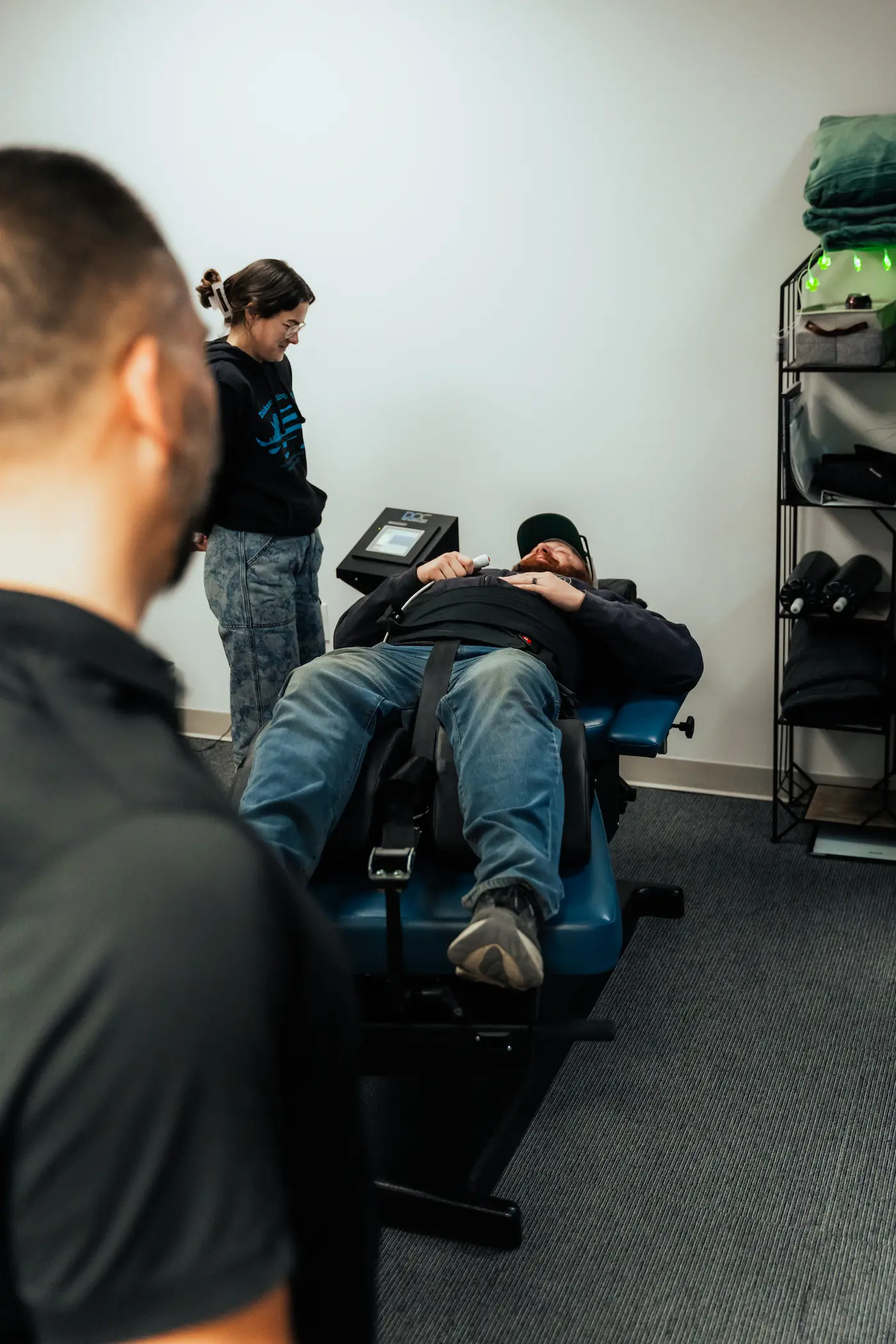
When you arrive for a session, you’ll lie down on the decompression table, typically on your back for lumbar treatment, though positioning depends on your specific situation. You remain fully clothed, so there’s nothing to change out of.
The team will fit you with a harness or padded straps, usually around your pelvis and sometimes around your trunk, depending on the area being treated. These are what allow the table to apply gentle traction to the right part of your spine. Getting comfortable and properly positioned is the priority before anything begins, and the setup takes just a few minutes.
Many patients are surprised at how ordinary this part feels. You’re simply lying comfortably on a padded table, secured with straps, ready to relax.
What the Traction Actually Feels Like
This is the part everyone wonders about. Once the session begins, the table gently and gradually applies traction, slowly stretching the targeted area of your spine. The AccuSPINA system is computer-controlled, which means the force is precise, smooth, and applied in gentle cycles rather than a constant pull.
Most patients describe the sensation as a gentle, comfortable stretch, a bit like the relief you feel when you stretch out a tight lower back, but more targeted and controlled. The table works in cycles, gradually increasing the stretch, holding it briefly, then easing off, then repeating. That rhythmic pattern of stretch and release is a big part of why it feels soothing rather than intense.
You should not feel pain during decompression. A gentle pulling or stretching sensation is normal and expected. Sharp pain is not, and if you ever felt discomfort, you’d simply let the team know and the settings would be adjusted. The treatment is fully controllable and can be stopped instantly if needed, which many patients find reassuring to know before they start.
How Long a Session Lasts
A typical decompression session lasts somewhere in the range of 20 to 30 minutes, though the exact time depends on your treatment plan. During that time, you’re simply lying comfortably as the table does its work through those gentle cycles.
Because there’s nothing you need to actively do, many patients use the time to relax completely. It’s genuinely common for people to close their eyes, and some drift off to sleep. There’s no effort required on your part, which is part of what makes it such a low-stress treatment.
What You’ll Feel Afterward
One of the best things about decompression is that there’s no recovery time. When the session ends, the traction gradually releases, the straps come off, and you get up. You can immediately return to your normal day, whether that’s back to work, running errands, or getting on with whatever you had planned.
Most people feel fine or even noticeably relieved right after a session. Some feel a pleasant sense of looseness in the treated area. Occasionally, particularly after the first few sessions, a patient might feel a little tired or mildly sore as the body responds to the treatment, similar to how you might feel after gentle exercise. This is normal and typically settles quickly.
What you won’t experience is the downtime, restrictions, or recovery associated with more invasive treatments. You walk in, have a comfortable session, and walk out ready to continue your day.
Does It Work After One Session?
It’s worth setting honest expectations here. Decompression is a cumulative treatment, meaning it works progressively over a series of sessions rather than delivering full results from a single visit. Each session builds on the last, gradually reducing disc pressure, supporting healing, and relieving nerve compression over time.
Some patients notice relief early in their treatment plan, while others, particularly those with longer-standing or more significant disc problems, take more time to feel meaningful change. Dr. Dickason will give you an honest sense of the timeline for your specific situation. What matters is that the individual sessions themselves are comfortable and easy to fit into your life, which makes completing a full course of care very manageable.
Who Feels Nervous and Why It Fades Fast
The patients who feel most apprehensive beforehand are usually those who’ve had bad experiences with other treatments, or who imagine decompression as something more aggressive than it is. The word “traction” can sound intimidating, and the sight of the table can look more clinical than the experience actually is.
Nearly universally, that apprehension fades within the first session once patients realize how gentle it is. The gap between what people expect and what they actually experience is one of the more consistent things Dr. Dickason sees with decompression. If you’re nervous, that’s completely normal, and the reality is almost always far easier than the anticipation.
The Bottom Line on the Experience
A spinal decompression session is a gentle, comfortable, painless experience. You lie fully clothed on a padded table, get secured with straps, and experience a slow, rhythmic stretching of your spine for 20 to 30 minutes, with no effort required and no recovery time afterward. Most people find it relaxing, and the apprehension people feel beforehand rarely survives their first session.
If decompression has been recommended for you and you’d like to understand more about what it involves, or you’re ready to get started, reach out to Castle Rock Chiropractic at 303-688-2300 or schedule a consultation. Dr. Dickason will walk you through exactly what to expect for your situation and answer any questions before you begin.

About Dr. Clint Dickason, DC
Dr. Clint Dickason founded Castle Rock Chiropractic to serve his local community with personalized, natural wellness care. An Indiana native and Palmer College of Chiropractic graduate, he brings advanced training in clinical neurology and upper cervical techniques to Colorado families.
With athletic background in wrestling, football, and rugby, Dr. Dickason understands active lifestyle demands. He combines 20+ chiropractic techniques with Blood Flow Restriction therapy certification to address Castle Rock’s unique hiking, work, and family challenges.