Table of Contents
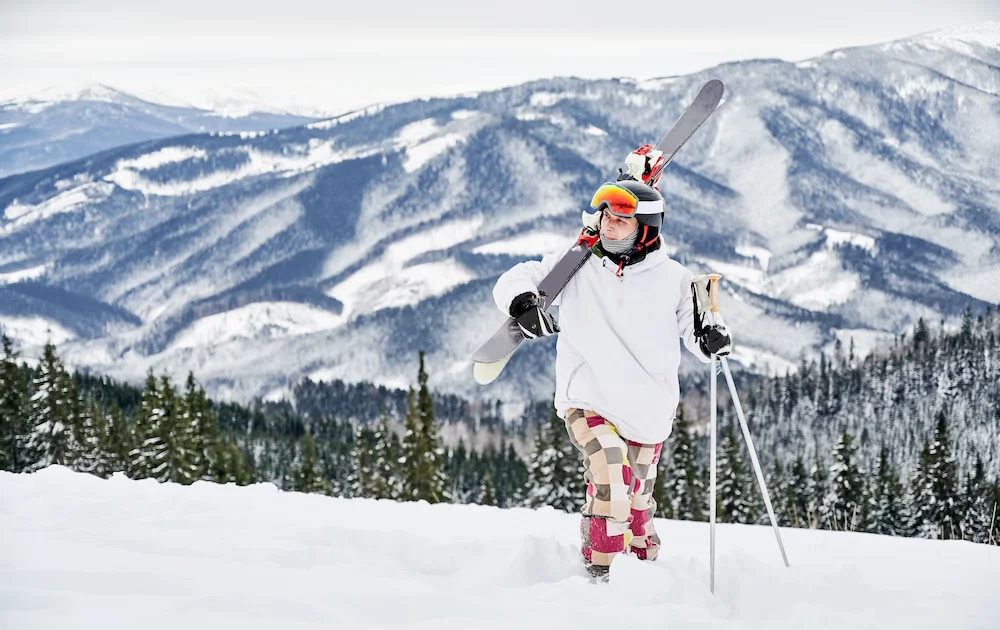
Castle Rock sits about an hour from some of Colorado’s best ski terrain, and a significant portion of the patients at Castle Rock Chiropractic are skiers who spend their winters on the mountain and their weekdays recovering from it. Most ski injuries get dismissed as bad luck – a wrong edge, an unexpected mogul, an awkward landing. But a lot of what gets labeled bad luck is actually a prepared body meeting an unprepared spine, and that’s something that can be changed before the season starts.
What Skiing Actually Does to Your Spine
Skiing is a full-body sport with a particular relationship to the lumbar spine and pelvis. Understanding that relationship helps explain why so many skiers end up dealing with back pain, hip pain, and nerve symptoms during or after a season – and why preparation matters more than most people realize.
The Lumbar Spine Takes the Hit
The athletic position in skiing – knees bent, hips slightly forward, upper body relatively upright – is a sustained partial squat that loads the lumbar extensors and lumbar discs continuously. On groomed runs that’s manageable. On moguls, variable snow, and off-piste terrain, the spine is absorbing repeated impact forces through those already-loaded structures.
For skiers with pre-existing lumbar joint restriction or disc issues that haven’t been addressed, those repetitive loads don’t just cause fatigue – they aggravate structural problems that were already there and quietly building. The mountain didn’t cause the injury. The mountain revealed it.
Rotation and the Thoracic Spine
Effective skiing requires good thoracic rotation – the mid-back needs to counterrotate against the lower body for balance and turn initiation. Skiers with stiff thoracic spines compensate by rotating from the lumbar spine instead, which loads the lumbar joints and discs in ways they’re not designed to handle for a full day of turns. Thoracic restriction is one of the most overlooked contributors to ski-related lower back pain.
Falls and the Cervical Spine
Falls happen in skiing – even to experienced skiers. High-speed falls, tumbles into packed snow, and collisions with terrain features all create rapid loading forces that the cervical spine absorbs. Whiplash-type injuries from ski falls are common and frequently undertreated because skiers get up, brush off, and keep going. Those unaddressed cervical injuries accumulate over seasons and often present later as chronic neck pain, headaches, and upper extremity symptoms.
The SI Joint and Hip Loading
The sacroiliac joints – connecting the lower spine to the pelvis – absorb significant forces during skiing, particularly on uneven terrain and during recovery from off-balance positions. Skiers with existing SI joint dysfunction often find it flares significantly during ski season, producing deep pelvic and buttock pain that can mimic sciatica and interfere with the hip mobility skiing demands.
Why Pre-Season Is the Right Time to Address This
The mistake most skiers make is waiting until something hurts to get evaluated. By the time pain shows up on the mountain, the underlying restriction or disc issue has typically been building for months. Getting a spinal evaluation before the season starts gives you two advantages.
First, you find out what’s actually going on before it becomes a problem under load. Lumbar joint restrictions, early disc changes, thoracic stiffness, and SI joint dysfunction that are manageable in daily life become symptomatic fast under the demands of a ski day. Knowing about them – and addressing them – before you’re on the mountain changes the outcome.
Second, pre-season correction takes less time than injury rehabilitation. Addressing a lumbar restriction in October when you have six weeks before your first ski day is a very different proposition than trying to manage acute disc pain in January when you’ve already missed two weekends and you’re trying to get back on the slope as fast as possible.
What Pre-Season Spinal Prep Looks Like at Castle Rock Chiropractic
Dr. Dickason evaluates skiers the same way he evaluates any patient – starting with a thorough history and moving into a physical examination that identifies where the real restrictions are. For skiers specifically, that assessment pays particular attention to:
- Lumbar joint mobility and disc health – the primary load-bearing structures during skiing
- Thoracic rotation range of motion – critical for proper skiing mechanics and often restricted in desk workers
- Sacroiliac joint alignment and mobility – frequently impacted by ski season loading
- Hip mobility – limited hip range of motion forces compensatory lumbar loading
- Any unresolved cervical issues from previous season falls or year-round posture problems
Chiropractic adjustments before ski season restore normal motion to restricted segments so the spine can handle dynamic loading the way it’s designed to. For skiers with disc-related findings, a course of spinal decompression before the season starts reduces disc vulnerability before it’s tested on the mountain.
During the Season: What to Watch For
Even with good preparation, ski season puts real demands on the spine. A few patterns worth paying attention to during the season:
Pain That Builds Through the Ski Day
Some fatigue and muscle soreness after a long ski day is normal. Pain that starts mild and progressively worsens through the day – particularly lower back pain or leg symptoms that increase with runs – suggests the spine is under more load than it can manage comfortably. This is worth getting evaluated between ski weekends rather than pushing through.
Symptoms After a Fall
If you fall and feel neck pain, back pain, or any radiating symptoms afterward – even if you feel mostly okay – get evaluated before skiing again. Soft tissue and spinal injuries from ski falls don’t always present immediately. The adrenaline of being on the mountain masks pain effectively, and what feels like minor soreness on the chairlift can become significant stiffness or nerve symptoms by the next morning.
Hip or Buttock Pain That Doesn’t Resolve Between Weekends
Persistent SI joint or hip pain between ski weekends is a sign the joint isn’t recovering fully between sessions. That cumulative loading without recovery is how minor dysfunction becomes a season-ending problem. Address it early.
After a Ski Injury: Chiropractic Care in the Recovery Phase
For skiers who do sustain injuries during the season – whether from falls, overuse, or accumulated load – chiropractic care plays a useful role in the recovery phase. Restoring joint motion, reducing nerve irritation, and addressing the compensation patterns that develop around an injury all support faster return to activity than rest alone.
Dr. Dickason has an athletic background himself – competitive wrestling and football – and understands the specific frustration of being sidelined from a sport you care about. The approach at Castle Rock Chiropractic for injured athletes focuses on getting back to activity safely and as quickly as the tissue allows, with honest communication about the timeline.
Simple Things Castle Rock Skiers Can Do Now
A few practical steps before ski season that make a real difference:
- Get a spinal evaluation if you haven’t had one recently. Especially if last season ended with back or hip pain you “just dealt with.”
- Start hip and thoracic mobility work now. Wall slides for thoracic extension, hip 90/90 stretches, and single-leg balance work are simple and effective pre-season prep.
- Build your legs before the first day. The stronger your legs, the less the lumbar spine has to compensate for fatigue-driven form breakdown late in the ski day.
- Don’t skip the warm-up run. Cold muscles and stiff joints on the first run of a cold morning are when injuries happen. Warm up deliberately.
- Stay hydrated on the mountain. Colorado’s altitude and dry air accelerate dehydration, which affects disc health. Drink water between runs, not just après-ski.
If you want to ski well all season and not spend February rehabbing a back injury that could have been prevented, a pre-season visit to Castle Rock Chiropractic is a good investment. Call us at 303-688-2300 or schedule a consultation online. Dr. Dickason will give you an honest picture of what your spine looks like heading into the season and what – if anything – needs attention before you click into your bindings.
About Dr. Clint Dickason, DC
Dr. Clint Dickason founded Castle Rock Chiropractic to serve his local community with personalized, natural wellness care. An Indiana native and Palmer College of Chiropractic graduate, he brings advanced training in clinical neurology and upper cervical techniques to Colorado families.
With athletic background in wrestling, football, and rugby, Dr. Dickason understands active lifestyle demands. He combines 20+ chiropractic techniques with Blood Flow Restriction therapy certification to address Castle Rock’s unique hiking, work, and family challenges.