Table of Contents
Spinal stenosis is a gradual narrowing of the spaces in the spine where nerves travel, and in the lower back it typically causes leg pain, heaviness, or weakness with walking or standing that eases when you sit or lean forward. For most people with moderate stenosis and normal nerve function, conservative care is the right first step. Gentle approaches like Cox Flexion-Distraction, chiropractic adjustments, and in some cases spinal decompression can improve walking tolerance and daily function, while surgery is reserved for severe or worsening nerve problems.
Spinal stenosis is one of the most common diagnoses older adults receive after imaging, and one of the most misunderstood. Many patients come to Castle Rock Chiropractic having been told their stenosis is something to manage until they need surgery. That framing often leaves out a significant middle ground where conservative care can produce meaningful, lasting improvement without surgery.
What Spinal Stenosis Actually Means
Stenosis means narrowing. Spinal stenosis is a narrowing of the spaces in the spine that the spinal cord and nerve roots pass through. When those spaces narrow enough to press on nerves, symptoms develop.
There are two main types:
Central Canal Stenosis
This is a narrowing of the spinal canal itself, the central channel that houses the spinal cord and, in the lower back, the bundle of nerve roots called the cauda equina. Central stenosis in the lower back is the most common type in older adults and causes a pattern called neurogenic claudication: leg pain, heaviness, or weakness that comes on with walking or standing and eases with sitting or bending forward.
Foraminal Stenosis
The foramen are the openings on each side of the spine where individual nerve roots exit. Foraminal stenosis, a narrowing of these openings, presses on specific nerve roots and causes pain, tingling, or weakness that travels down the arm or leg along that nerve’s path. It overlaps a lot with what patients experience as a pinched nerve.
What Causes the Narrowing
Spinal stenosis is almost always the result of degenerative changes that develop gradually. The structures that most often crowd the nerves include:
- A thickened ligamentum flavum, the ligament along the back of the spinal canal, which thickens with age and can buckle inward as discs lose height
- Bone spurs that form at the edges of the vertebrae and facet joints as the body tries to stabilize a degenerating segment
- Bulging or herniated discs that reduce the front-to-back space in the canal
- Enlarged facet joints from long-term wear, which narrow the openings from behind
These changes happen over years or decades, which is why stenosis is mostly a condition of middle-aged and older adults in Castle Rock and Douglas County. And because it develops gradually, it often responds to consistent, gradual conservative care.
The Characteristic Symptom: Why Sitting Helps and Walking Hurts
The positional nature of lower back stenosis is one of its most useful features for diagnosis, and one of the most important things for patients to understand.
When you stand and walk, your lower back moves into slight extension (backward bending), which reduces the space in the spinal canal and the openings where nerves exit. For someone with stenosis, that extra narrowing presses on the nerves, causing the leg heaviness, cramping, pain, or weakness that shows up on longer walks.
When you sit or bend forward, your lower back flexes, which opens those spaces a little and gives the nerves more room. That’s why people with stenosis instinctively lean on shopping carts, find uphill walking easier than downhill, and get relief within minutes of sitting on a bench.
Leg pain with walking can also come from poor circulation in the legs, called vascular claudication. That type usually eases when you simply stand still, without needing to sit or bend forward, and may come with cold feet or weak pulses. If your symptoms fit that pattern, see your doctor, since it needs a different kind of care.
Understanding the stenosis pattern also explains why Cox Flexion-Distraction is well suited to it. The technique is designed to introduce gentle, controlled flexion to the narrowed segments, easing the pressure that walking creates.
Why Conservative Care Is Often More Effective Than Patients Are Told
Spinal stenosis surgery, typically a laminectomy to remove the bone and tissue narrowing the canal, can work well for severe cases with significant nerve problems. For moderate stenosis, the picture is more nuanced. Some patients continue to have symptoms after surgery, some need additional procedures, and the levels next to a surgical site can take on extra stress over time.
Research comparing structured rehabilitation with surgery for lower back stenosis has found that many patients do about as well at two years with conservative care. For people with moderate stenosis and normal nerve function, which describes most Castle Rock patients with this diagnosis, conservative care is the appropriate first step, and it often works well enough that surgery never becomes necessary.
Dr. Dickason has treated stenosis patients in Castle Rock since 2006, and many achieve better results with consistent conservative care than they expected when they first received their diagnosis.
How Castle Rock Chiropractic Approaches Spinal Stenosis
Cox Flexion-Distraction
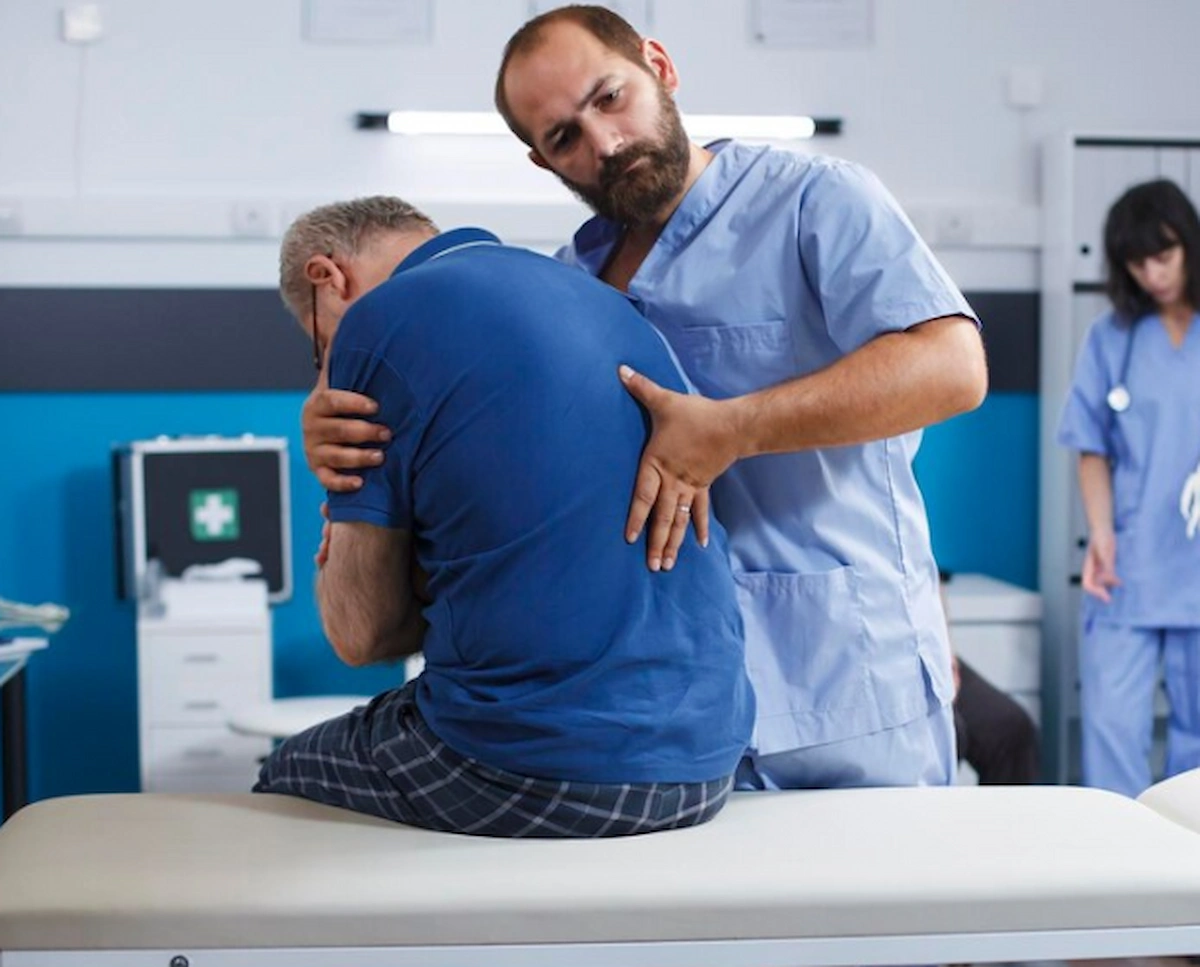
This is the primary hands-on technique for stenosis at Castle Rock Chiropractic. The Cox table introduces gentle, controlled flexion and distraction to the affected segments while Dr. Dickason applies specific manual contact. It’s designed to ease pressure on the nerves while avoiding the backward bending that worsens symptoms. Sessions are comfortable, require no recovery time, and can usually be done even during flare-ups.
Chiropractic Adjustments to Adjacent Segments
The segments above and below a narrowed level often become stiff as they compensate for reduced motion at that level. Chiropractic adjustments to these segments reduce the overall load on the narrowed area and improve how the whole lower back moves.
Spinal Decompression Therapy
When disc height loss or a disc herniation is part of the narrowing, spinal decompression therapy on the AccuSPINA system may help reduce disc-related pressure and support disc health. Decompression is chosen based on each patient’s specific anatomy. It’s more appropriate for some types of stenosis than others, and the evaluation guides that decision.
What Stenosis Patients in Castle Rock Can Realistically Expect
Honest expectations matter more for stenosis than for almost any other condition. The structural narrowing doesn’t reverse with conservative care, since bone spurs and thickened ligaments that developed over years don’t disappear. What can change is how well the nerves function within the available space, how much irritation surrounds them, and how well the whole lower back moves to reduce the load on the narrowed segments.
Many patients with moderate stenosis see meaningful improvement in how far they can walk, fewer and milder leg symptoms, and better day-to-day function, especially with consistent care and attention to the positions that aggravate their symptoms. Some achieve near-complete relief. Others reach a stable, manageable level that keeps them active without surgery.
After a thorough evaluation, Dr. Dickason will tell you honestly which group your situation seems to fit, including when he thinks a surgical consultation is warranted.
When Stenosis Needs Medical Care Right Away
Go to the emergency room for loss of bladder or bowel control, numbness in the groin or inner thighs, or rapidly worsening leg weakness. Stenosis in the neck can press on the spinal cord, so hand clumsiness, trouble with buttons or handwriting, or new balance problems also need prompt evaluation by a spine specialist.
Questions Castle Rock Stenosis Patients Ask
My MRI shows severe stenosis. Does that mean I need surgery?
Not necessarily. MRI findings and symptoms don’t always match, and how you’re functioning, how your nerves are holding up, and how you respond to care matter more than the MRI grade alone.
Is walking good or bad for spinal stenosis?
Walking is generally good for you, but pacing matters. Short, frequent walks with rest breaks, slight inclines, or trekking poles that encourage a mild forward lean can help you walk farther comfortably.
How is stenosis different from a herniated disc?
A herniated disc is a more recent shift of disc material that often causes sharp, specific nerve pain, while stenosis is a gradual narrowing that causes positional, activity-related symptoms and usually needs a longer course of care.
If you’ve been diagnosed with spinal stenosis in Castle Rock and want to explore what conservative care can realistically do for your situation, contact Castle Rock Chiropractic at 303-688-2300 or visit our new patients page to schedule a consultation.
About Dr. Clint Dickason, DC
Dr. Clint Dickason founded Castle Rock Chiropractic to serve his local community with personalized, natural wellness care. An Indiana native and Palmer College of Chiropractic graduate, he brings advanced training in clinical neurology and upper cervical techniques to Colorado families.
With athletic background in wrestling, football, and rugby, Dr. Dickason understands active lifestyle demands. He combines 20+ chiropractic techniques with Blood Flow Restriction therapy certification to address Castle Rock’s unique hiking, work, and family challenges.