
Table of Contents
Cox Flexion-Distraction is a gentle, hands-on chiropractic technique that patients often specifically seek out for disc and back problems. But like any treatment, it’s better suited to some situations than others. If you’re wondering whether it’s the right approach for you, this walks through who tends to benefit most, who might be better served by a different approach, and how that determination is actually made.
A Quick Refresher on What Cox Is
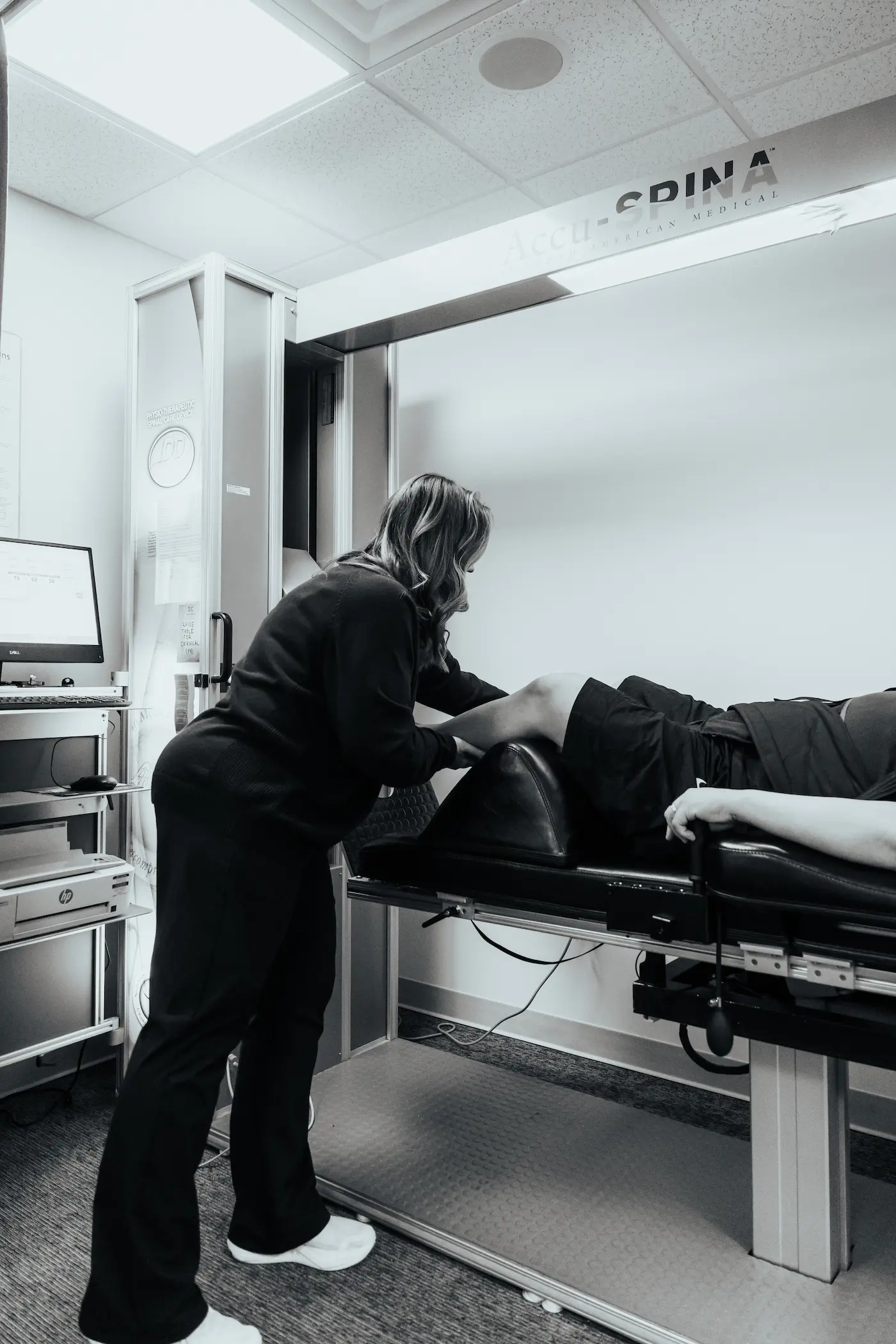
Cox Flexion-Distraction uses a specialized segmented table that gently flexes and decompresses specific spinal segments while the chiropractor guides the motion by hand. The result is a gentle, controlled decompression of targeted areas of the spine, without twisting, forceful thrusting, or the popping associated with some other adjustment techniques. It’s known for being comfortable, and it can often be performed even during acute flare-ups when other approaches aren’t appropriate. Dr. Dickason uses this technique regularly at Castle Rock Chiropractic and is one of the reasons patients seek out the practice.
Who Tends to Be a Good Candidate
Cox Flexion-Distraction is particularly well-suited to certain conditions and patient situations. You may be a good candidate if you fall into one of these categories.
People With Disc Problems
Cox is one of the most well-suited techniques for disc conditions. If you have a herniated or bulging disc, the gentle decompression Cox provides can help reduce pressure within the disc and relieve the associated nerve compression. It’s often an appropriate approach even in the acute, painful phase of a disc problem, which is a significant advantage.
People With Sciatica From Disc Compression
When sciatica is being driven by a disc pressing on a lumbar nerve root, Cox can target the specific level responsible and gently decompress it, reducing the nerve irritation that’s causing the radiating leg pain.
People With Spinal Stenosis
Cox has a particularly strong track record with spinal stenosis. The flexion motion it introduces helps open the narrowed spaces that characterize stenosis, relieving the nerve compression that causes symptoms. For stenosis patients, especially older adults, Cox is often one of the most appropriate hands-on approaches available.
People Who Want a Gentle Approach
If you’re nervous about traditional chiropractic manipulation, or you simply prefer a gentler approach without the forceful thrusting and popping, Cox is an excellent fit. It provides effective disc and spine care through a comfortable, controlled technique. This makes it well-suited to patients who are apprehensive, as well as those whose situations call for a gentler approach.
Older Adults and Those With Degenerative Changes
For older patients or those with significant degenerative changes where high-velocity manipulation may not be the best choice, Cox offers effective care through a gentle mechanism that’s appropriate for more fragile or degenerated spines.
Post-Surgical Patients With Continued Pain
Cox can often be appropriate for patients who’ve had prior back surgery and still experience pain, as the technique can be adapted to avoid stress on surgical sites while still providing therapeutic benefit to other areas.
Who Might Be Better Served by a Different Approach
Being honest about this matters, because Cox isn’t the right answer for every situation. Certain circumstances call for a different approach or additional evaluation first.
Patients with certain conditions affecting bone integrity, advanced osteoporosis, spinal fractures, certain tumors or infections, or specific instabilities, may not be appropriate candidates, or may require careful evaluation and a modified approach. Patients whose symptoms suggest a problem that isn’t mechanical in nature need that ruled out first. And patients with severe or progressive neurological symptoms, such as significant worsening weakness or any loss of bowel or bladder control, need urgent evaluation rather than routine care, as these can indicate a situation requiring different or immediate intervention.
This is exactly why a thorough evaluation comes before treatment. Determining candidacy isn’t guesswork, it’s based on a careful assessment of your specific condition, history, and presentation.
How Candidacy Is Actually Determined
The only reliable way to know whether Cox Flexion-Distraction is right for you is through a proper evaluation. When you come in, Dr. Dickason performs a thorough history and physical examination to understand exactly what’s going on. This includes assessing your specific condition, identifying the source of your symptoms, screening for any factors that would make Cox inappropriate, and determining whether imaging or additional evaluation is warranted first.
From that assessment, he can determine whether Cox is a good fit for your situation, whether it should be combined with other approaches, or whether a different treatment path makes more sense for you. This individualized determination is far more reliable than trying to self-assess based on general information.
Cox as Part of a Bigger Picture
It’s worth noting that Cox Flexion-Distraction is often used alongside other approaches rather than in isolation. For many patients, the best results come from combining Cox with complementary care. A disc patient might benefit from Cox along with spinal decompression therapy and supportive treatments as part of a complete plan. Dr. Dickason’s proficiency across many techniques means Cox is one tool among several, selected and combined based on what your specific situation calls for.
So even if you turn out to be an excellent Cox candidate, the full approach may include other elements tailored to your needs. And if Cox isn’t the ideal fit, there are other effective options available.
Finding Out If Cox Is Right for You
Cox Flexion-Distraction is a gentle, effective technique that’s particularly well-suited to disc problems, sciatica, spinal stenosis, and patients who want a comfortable, non-forceful approach. Whether it’s right for your specific situation is something a proper evaluation determines, taking into account your condition, your history, and your individual circumstances.
If you’d like to find out whether you’re a good candidate for Cox Flexion-Distraction, reach out to Castle Rock Chiropractic at 303-688-2300 or schedule a consultation. Dr. Dickason will evaluate your situation and give you an honest assessment of whether Cox, or another approach, is the best fit for what you’re dealing with.
About Dr. Clint Dickason, DC
Dr. Clint Dickason founded Castle Rock Chiropractic to serve his local community with personalized, natural wellness care. An Indiana native and Palmer College of Chiropractic graduate, he brings advanced training in clinical neurology and upper cervical techniques to Colorado families.
With athletic background in wrestling, football, and rugby, Dr. Dickason understands active lifestyle demands. He combines 20+ chiropractic techniques with Blood Flow Restriction therapy certification to address Castle Rock’s unique hiking, work, and family challenges.