Table of Contents
One of the hardest things about concussion has always been that it’s difficult to measure objectively. Unlike a broken bone that shows on an X-ray, a concussion typically doesn’t appear on standard imaging, which has historically left assessment relying heavily on symptom reports. RightEye sensorimotor testing changes that by giving an objective window into how the brain and eyes are working together. Here’s what the technology is and how it helps assess concussion after an accident.
Why Concussion Is Hard to Detect
To understand why RightEye is valuable, it helps to understand the core challenge with concussion. A concussion is a mild traumatic brain injury, an injury to how the brain functions rather than a visible structural injury to the brain tissue. Because of this, concussions usually don’t show up on standard imaging like X-rays or CT scans, which are designed to detect structural damage like bleeding or fractures.
This has traditionally made concussion assessment heavily dependent on subjective information: how the patient says they feel, what symptoms they report, and how they perform on questionnaires. While symptom reporting is important, it has real limitations. Symptoms can be subtle, delayed, or hard to describe. Patients may downplay them or not connect them to the accident. Some of the effects of concussion aren’t things a person can easily self-report at all.
What has been missing is an objective measure, something that assesses brain function directly rather than relying solely on what the patient can perceive and describe. That’s the gap RightEye helps address.
The Connection Between Your Eyes and Your Brain
The reason eye movement can reveal so much about brain function comes down to how much of the brain is involved in controlling your eyes. Eye movements are governed by extensive neural circuitry spanning many areas of the brain. Tracking a moving object, holding a steady gaze, shifting focus between points, and coordinating both eyes together all require precise, rapid communication across large portions of the brain.
Because so much of the brain is involved in controlling eye movements, disruptions in that control can reveal problems that might not be obvious otherwise. When a concussion affects brain function, it often shows up in subtle disruptions to how smoothly and accurately the eyes move and coordinate. These disruptions can be too subtle for a person to notice in themselves, but they can be measured.
This is the principle behind RightEye: by precisely measuring eye movements, it provides an objective window into aspects of brain function that are otherwise hard to assess.
What RightEye Sensorimotor Testing Actually Does
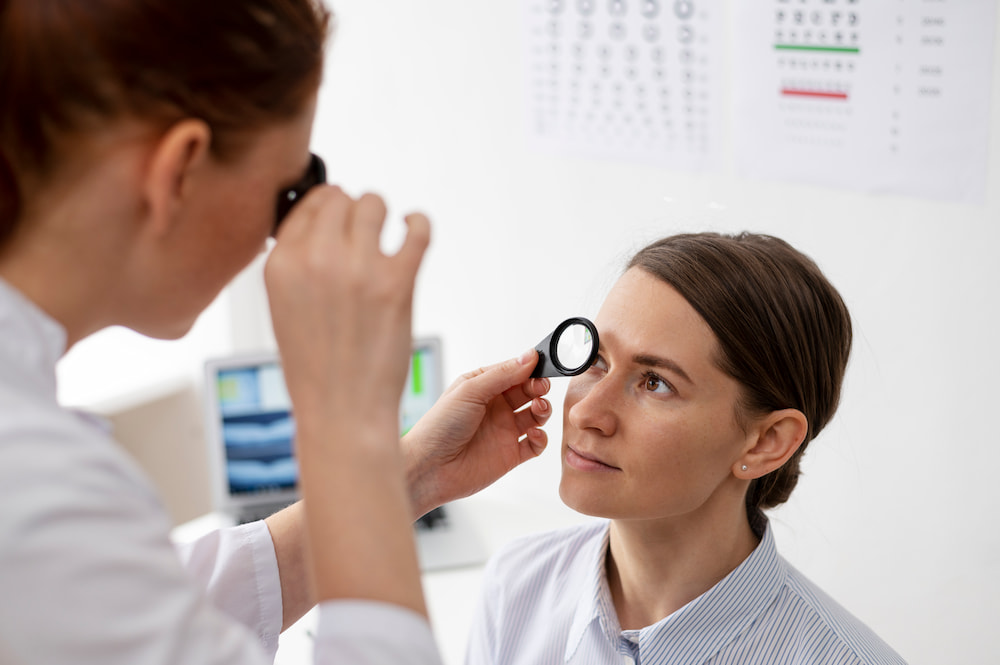
RightEye technology uses precise eye-tracking to measure how well your eyes and brain are working together. During testing, the system tracks your eye movements with a level of precision far beyond what the human eye could observe, capturing how accurately and smoothly you perform various visual tasks.
The testing evaluates brain-eye coordination, assessing how well the visual and neurological systems are functioning together. Because eye movement control depends on healthy brain function, measurable disruptions in that coordination can help identify signs consistent with concussion. This gives an objective data point to support the overall assessment, complementing the symptom-based evaluation rather than replacing it.
The testing itself is non-invasive and straightforward from the patient’s perspective. There’s nothing uncomfortable involved, you’re simply performing visual tracking tasks while the system measures your responses.
Why Objective Assessment Matters After an Accident
Having an objective measure adds real value to post-accident care in several ways.
It helps catch subtle concussions that might otherwise be missed, particularly the mild or delayed presentations where symptoms are vague or slow to appear. It provides objective information to support the clinical picture rather than relying entirely on subjective reports. And it contributes to the thorough documentation that matters for accident care, adding an objective dimension to the assessment record.
For patients dealing with the aftermath of a whiplash and concussion situation, where the same accident forces often cause both, having objective assessment of the concussion component is genuinely useful. It helps ensure the brain injury aspect isn’t overlooked while attention is focused on the more obvious neck injury.
An Honest Note on What Testing Does and Doesn’t Do
It’s important to be clear about the role of this testing. RightEye supports the evaluation and assessment of concussion, it is not a standalone, definitive diagnosis on its own. Concussion assessment is a clinical process that considers the full picture: the mechanism of injury, the symptoms, the physical examination, and objective testing together.
What RightEye provides is a valuable objective input into that process, something that has traditionally been hard to obtain. It strengthens the assessment rather than replacing clinical judgment. This honest framing matters, and it’s how Dr. Dickason approaches the technology, as a powerful tool within a thorough evaluation rather than a magic answer.
Dr. Dickason’s Neurological Background
Interpreting concussion assessment well requires understanding the neurology involved, which is where Dr. Dickason’s post-graduate training in clinical neurology through the Carrick Institute becomes relevant. That training informs how he uses tools like RightEye, integrates the results into a complete clinical picture, and determines when a patient needs co-management with other medical providers.
Concussion sometimes requires a broader medical team, and Dr. Dickason is clear about recognizing when that’s the case. The objective data from RightEye supports better-informed decisions about a patient’s care and when additional medical involvement is appropriate. Offering this kind of objective concussion assessment is a meaningful differentiator, as relatively few chiropractic offices provide it.
Getting Assessed After an Accident
If you’ve been in a car accident, particularly one where you’ve experienced any head impact or the kind of forces that cause whiplash, objective concussion assessment is a valuable part of a thorough evaluation. Given how easily concussions are missed and how their symptoms can be subtle or delayed, having an objective measure of brain-eye coordination adds real confidence to knowing where you stand.
To learn more about post-accident assessment including RightEye testing, reach out to Castle Rock Chiropractic at 303-688-2300 or schedule an evaluation online. You can also read more about the practice’s approach to accident care on the auto accident care page. After a crash, a thorough assessment that includes objective concussion testing is one of the most worthwhile things you can do.
About Dr. Clint Dickason, DC
Dr. Clint Dickason founded Castle Rock Chiropractic to serve his local community with personalized, natural wellness care. An Indiana native and Palmer College of Chiropractic graduate, he brings advanced training in clinical neurology and upper cervical techniques to Colorado families.
With athletic background in wrestling, football, and rugby, Dr. Dickason understands active lifestyle demands. He combines 20+ chiropractic techniques with Blood Flow Restriction therapy certification to address Castle Rock’s unique hiking, work, and family challenges.