Table of Contents
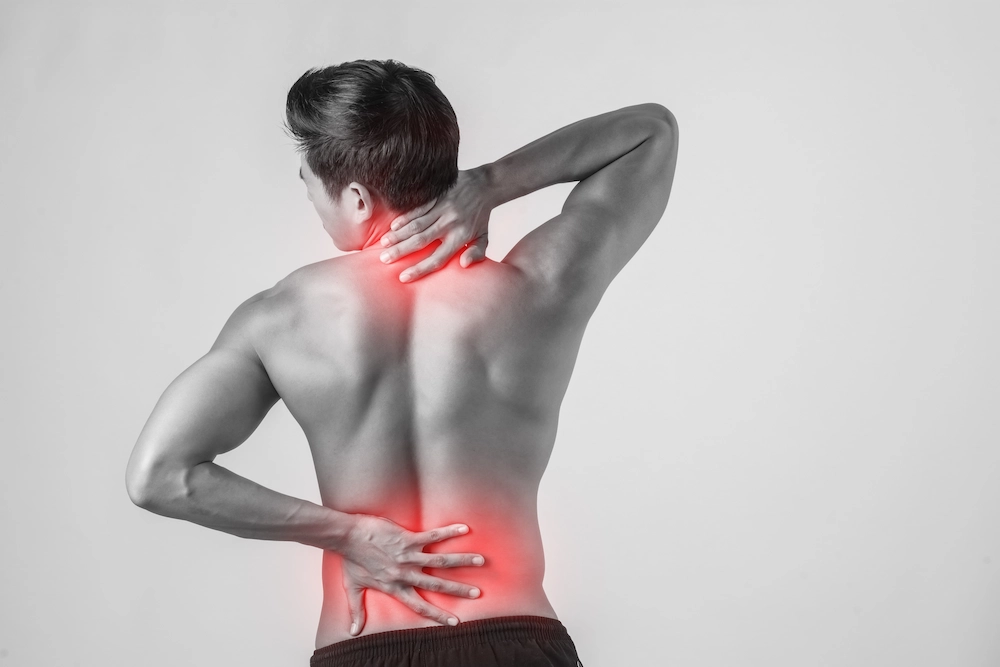
One of the most common questions patients ask before booking at Castle Rock Chiropractic is some version of this: “Is it a muscle thing, or is something actually wrong with my spine?” It’s a fair question – and the answer matters, because muscle pain and structural spinal problems respond to different treatments. Getting that distinction right is what determines whether your care actually fixes the problem or just manages the symptom.
Why the Distinction Matters
Muscle pain and spinal structural problems can feel remarkably similar from the inside. Both produce aching, tightness, and limited movement. Both get worse with certain positions and better with others. Both can refer pain to other areas. The experience of pain alone doesn’t tell you which one you’re dealing with.
But the cause is different, which means the solution is different. A pure muscle strain from overdoing it on the trail responds well to rest, gentle movement, and time. A herniated disc producing muscle guarding around it needs the disc addressed – the muscle tightness is a downstream response to a structural problem, and treating only the muscle leaves the actual driver untouched. Doing the wrong thing doesn’t just fail to help – it can delay recovery significantly.
What Pure Muscle Pain Usually Looks and Feels Like
Muscle pain – whether from a strain, overuse, or sustained tension – has some characteristic patterns that help identify it:
It Has a Clear Precipitating Event
Muscle strains usually follow something specific: an unusually heavy hike on the Ridgeline trails, moving furniture, an awkward yard work position, or a sudden movement. The pain shows up within hours to a day or two of that event and is clearly connected to what happened.
The Pain Is Diffuse and Hard to Pinpoint Exactly
Muscle pain tends to be broad and regional – “my whole lower back,” “across my upper shoulders,” “the left side of my neck.” It doesn’t usually track down a limb in a specific pattern. When you press on the sore area, the pain is right there under your fingers.
It Improves Meaningfully With Gentle Movement
Sore muscles typically feel worse first thing in the morning or after sitting still, and better after gentle movement and warmup. A 10-minute walk makes things noticeably more comfortable. That improvement with movement is a classic muscle behavior.
It Resolves Within Two to Four Weeks
Most acute muscle strains, if they’re genuinely just muscular, resolve within two to four weeks with basic care – rest, gentle activity, heat, and time. If you’re still dealing with significant pain beyond that window, something more than muscle involvement is likely contributing.
What Structural Spine Problems Usually Look and Feel Like
Structural problems – restricted joints, herniated discs, nerve root compression, facet dysfunction – tend to present with patterns that distinguish them from simple muscle pain:
Pain That Travels Beyond the Local Area
This is one of the clearest indicators of structural involvement. Pain that travels from the lower back into the buttock, hip, or leg – or from the neck into the shoulder, arm, or hand – suggests nerve root irritation or compression. Muscles don’t typically refer pain in those specific, limb-following patterns. When back pain travels down the leg, or neck pain travels into the arm, that’s the nerve talking.
Numbness, Tingling, or Weakness
Muscles don’t cause numbness or tingling. When those sensations are present alongside pain, a nerve is involved. Numbness and tingling in specific fingers, weakness in the grip, foot drop, or difficulty with fine motor tasks all point toward nerve compression – typically from a disc herniation, joint restriction, or foraminal narrowing – rather than a muscle problem.
Pain That Doesn’t Follow the Expected Recovery Timeline
If back or neck pain has been present for more than four to six weeks without meaningful improvement, or if it keeps returning after brief periods of relief, the pain is almost certainly driven by something structural. Muscle strains don’t cycle. Joint restriction, disc problems, and nerve irritation do.
Specific Positions That Consistently Aggravate or Relieve
Structural spinal problems tend to have very consistent positional triggers. Disc herniations often feel worse with forward bending and better with extension. Facet joint problems are often the opposite. Spinal stenosis typically improves with forward flexion and worsens with standing and walking. These predictable positional patterns are clinically useful because they point toward specific structures – and muscles don’t behave that way as consistently.
Pain That Wakes You From Sleep
Waking from sleep with significant back or neck pain – particularly if it’s in a specific position and changing position provides relief – suggests structural involvement. Muscle soreness is generally present throughout the night but doesn’t tend to wake people from sleep the way nerve irritation and structural pain does.
The Complication: Most Real Cases Are Both
Here’s the part that makes self-diagnosis unreliable: in most actual presentations, muscle involvement and structural involvement are happening at the same time. A restricted lumbar joint produces muscle guarding around it. A herniated disc creates protective spasm in the surrounding paraspinals. A facet joint problem irritates the adjacent muscles.
The muscle pain is real – but it’s secondary to the structural driver. Treating only the muscle gives temporary relief because the spasm releases. But the structural problem remains, the muscle re-guarding, and the cycle continues. This is one of the most common reasons people find that massage and soft tissue work help temporarily but never produce lasting results.
Understanding which came first – and which is maintaining the problem – requires an examination, not a self-assessment.
When to Seek Evaluation Rather Than Waiting It Out
Rest and gentle activity are appropriate for short-term muscle pain with a clear cause. But there are patterns that warrant getting evaluated sooner rather than waiting:
- Pain that travels beyond the local area into a limb
- Any numbness, tingling, or weakness
- Pain that hasn’t improved meaningfully after two to three weeks
- Pain that wakes you from sleep regularly
- Recurring pain that follows the same pattern every few weeks or months
- Pain following a significant impact, fall, or accident
- Back or neck pain with any changes in bowel or bladder function (this warrants immediate evaluation)
What the Evaluation Reveals
When patients come to Castle Rock Chiropractic unsure whether they’re dealing with a muscle problem or something structural, the examination typically answers the question clearly. Dr. Dickason’s assessment includes orthopedic tests that stress specific structures – helping identify whether the pain source is a disc, a facet joint, a restricted segment, or primarily muscular. Neurological screening identifies nerve involvement. Hands-on palpation distinguishes between localized muscle guarding and the deeper, more fixed restriction of a spinal joint problem.
From that picture, the appropriate care becomes clear. Sometimes it is primarily muscular, and the recommendation reflects that – targeted soft tissue work, movement guidance, and reassurance about timeline. More often, there’s a structural component that explains why the muscle problem keeps coming back, and that becomes the focus of care.
If you’re not sure which category you fall into, that uncertainty is exactly what a new patient evaluation at Castle Rock Chiropractic is designed to resolve. Call us at 303-688-2300 or schedule online. Most new patients are seen and treated on the same visit, so you’ll leave with answers – not just an appointment for next week.
About Dr. Clint Dickason, DC
Dr. Clint Dickason founded Castle Rock Chiropractic to serve his local community with personalized, natural wellness care. An Indiana native and Palmer College of Chiropractic graduate, he brings advanced training in clinical neurology and upper cervical techniques to Colorado families.
With athletic background in wrestling, football, and rugby, Dr. Dickason understands active lifestyle demands. He combines 20+ chiropractic techniques with Blood Flow Restriction therapy certification to address Castle Rock’s unique hiking, work, and family challenges.