Table of Contents
If you’ve been told you might need back surgery, it’s worth knowing that surgery is rarely the only option, and for many disc conditions it isn’t the first thing to try. Non-surgical spinal decompression offers a conservative path that resolves or significantly improves a large share of the disc problems people assume require an operation. Before committing to surgery, here’s how the two approaches compare and what’s genuinely worth weighing.
What Each Approach Actually Does
These two approaches address disc problems in fundamentally different ways, and understanding that difference is the starting point.
Non-Surgical Spinal Decompression
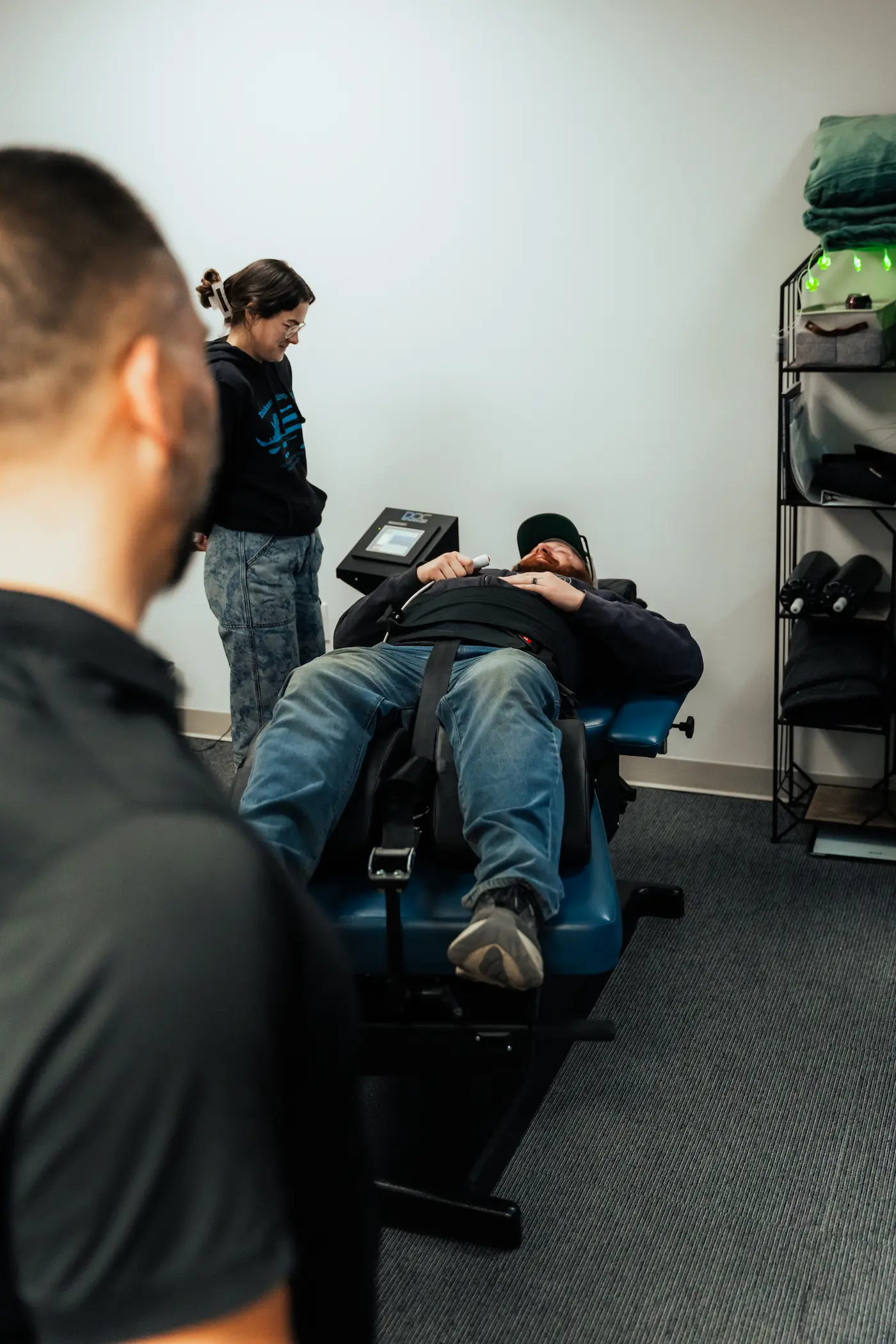
Spinal decompression therapy uses a computer-controlled table to gently stretch and decompress the spine, creating negative pressure within the affected disc. That negative pressure helps draw bulging or herniated disc material back toward center, takes pressure off the compressed nerve, and improves the flow of fluid and nutrients into the disc to support its natural healing. It works with the body’s own healing capacity rather than surgically altering the anatomy. At Castle Rock Chiropractic, this is delivered through the AccuSPINA system with IDD Therapy protocols.
Back Surgery
Surgical approaches physically alter the spine to relieve nerve compression. A discectomy removes the portion of a herniated disc that’s pressing on a nerve. A laminectomy removes bone to create more space in the spinal canal. A spinal fusion permanently joins two or more vertebrae together. These procedures can be effective and are sometimes genuinely necessary, but they involve altering the spine’s structure, and that carries different implications than a conservative approach.
The Case for Trying Decompression First
For most disc-related conditions without severe or progressive neurological compromise, conservative care is the appropriate starting point, and there are solid reasons for that.
It’s Non-Invasive
Decompression involves no incisions, no anesthesia, no hardware, and no surgical alteration of your spine. Sessions are comfortable, most patients find them relaxing, and there’s no recovery time. You can return to normal activity immediately after each session. That low-risk profile is a large part of why it makes sense to try before surgery.
No Recovery Downtime
Surgery requires a recovery period that can range from weeks to months depending on the procedure, during which activity is limited. Decompression requires none of that. You continue your life while undergoing treatment, which matters enormously for working adults, parents, and active Castle Rock residents who can’t easily pause their lives.
It Preserves Your Options
This is a point patients often overlook. Trying decompression first doesn’t take surgery off the table. If conservative care doesn’t produce the result you need, surgery remains available. But it doesn’t work the other way around, since surgery permanently changes your spine and can’t be undone. Starting with the reversible, non-invasive option preserves every future choice.
It Avoids Surgical Risks
Every surgery carries inherent risks, including those associated with anesthesia, infection, and the possibility that the procedure doesn’t fully relieve symptoms. There’s also a recognized phenomenon where fusion at one level accelerates degeneration at adjacent levels over time. Conservative care avoids these considerations entirely.
When Surgery Is Genuinely the Right Call
Being honest about this matters, because conservative care is not always the answer. Surgery is appropriate and sometimes urgent in specific situations, and a responsible provider will tell you clearly when you’re in one of them.
Surgery deserves serious consideration when there’s severe or rapidly progressing neurological compromise, such as significant and worsening muscle weakness, when there’s any loss of bowel or bladder control (which is a medical emergency requiring immediate attention), or when a reasonable, well-executed course of conservative care hasn’t produced adequate improvement and the condition is genuinely disabling.
These situations are the minority of disc cases, but they’re real, and Dr. Dickason screens for them carefully. If your presentation suggests surgery is warranted, he’ll tell you directly and help you get the appropriate referral rather than delaying necessary care.
What Decompression Treats Well
Non-surgical decompression is particularly well-suited to several of the conditions people are most often told might need surgery:
- Herniated and bulging discs compressing a nerve root
- Sciatica driven by disc compression in the lower back
- Degenerative disc disease with associated nerve symptoms
- Spinal stenosis in appropriate cases
- Chronic back and neck pain stemming from disc compression
- Some cases of failed back surgery where symptoms persist or returned
These are exactly the diagnoses that frequently lead to a surgical consultation, which is why it’s worth knowing that a conservative option exists and often works.
How to Think Through the Decision
If you’re weighing your options, a few questions help clarify the path.
How severe and progressive are your neurological symptoms? Stable symptoms without significant weakness generally favor trying conservative care first. Rapidly worsening weakness or any bowel or bladder changes shift the calculus toward urgent surgical evaluation.
Have you actually completed a proper course of conservative care? Many people are told they need surgery without ever having tried a well-executed course of decompression and chiropractic care. If you haven’t, that’s usually worth doing first.
What does an honest provider tell you? A trustworthy recommendation comes from someone who evaluates your specific situation and tells you the truth, including when conservative care is worth trying and when it isn’t. Be cautious of anyone who pushes a single answer without weighing your actual clinical picture.
The Castle Rock Approach
Dr. Dickason has spent 19 years helping Castle Rock patients avoid surgery where conservative care can genuinely resolve the problem, while being equally honest about the cases where surgery is the right path. The goal isn’t to avoid surgery at all costs, it’s to make sure you’ve explored the effective non-surgical options before undergoing an irreversible procedure, and to recognize when surgery is genuinely warranted.
Patients consistently describe Dr. Dickason’s honesty about what to expect as one of the reasons they trust his care. That honesty extends to this decision. If decompression is a good fit for your situation, he’ll explain why. If your case genuinely needs surgical evaluation, he’ll tell you that too.
If you’ve been told you might need back surgery and you want to understand whether non-surgical decompression could help first, reach out to Castle Rock Chiropractic at 303-688-2300 or schedule a consultation. Dr. Dickason will evaluate your specific situation and give you an honest assessment of your options before you make an irreversible decision.
About Dr. Clint Dickason, DC
Dr. Clint Dickason founded Castle Rock Chiropractic to serve his local community with personalized, natural wellness care. An Indiana native and Palmer College of Chiropractic graduate, he brings advanced training in clinical neurology and upper cervical techniques to Colorado families.
With athletic background in wrestling, football, and rugby, Dr. Dickason understands active lifestyle demands. He combines 20+ chiropractic techniques with Blood Flow Restriction therapy certification to address Castle Rock’s unique hiking, work, and family challenges.